Market Research

Analysis and trends impacting construction, housing, and development markets.

  • More interest in construction trades among young adults

    More interest in construction trades among young adults

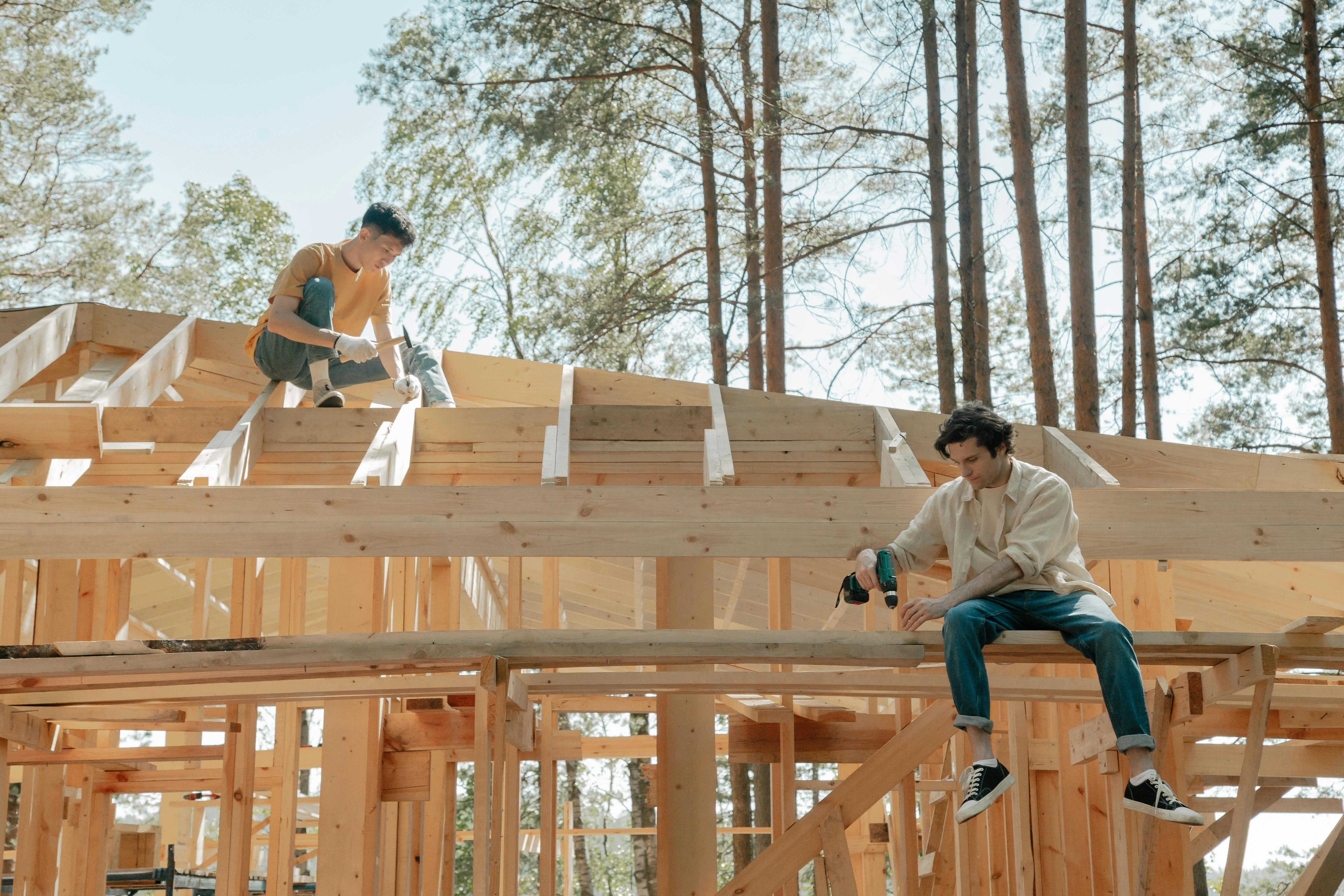
    A new survey from the National Association of Homebuilders (NAHB) reported a positive attitude amongst young adults, ages 18 to 25, towards the construction trades. In a positive development for the home building industry, the share interested in a career in the construction trades doubled from 3% in 2016 to 6% in 2026.

    Closing the housing deficit will necessarily entail recruiting younger workers willing to start a career in the construction trades. While most young adults know the field in which they want, or currently have, a career, certainty about career choice is waning. In 2016, 74% knew the field they wanted to work in. In 2026, that share is down to 65%. The drop is likely associated with broader economic uncertainty and changing labor market dynamics. However, NAHB’s survey revealed an improved interest in careers in residential construction.

    Read More 

  • Housing Affordability Reaches Best Level Since January 2022

    Housing Affordability Reaches Best Level Since January 2022

    Housing affordability began the year on its strongest footing since August 2022. In January 2026, the First American Data & Analytics Real House Price Index (RHPI) showed housing affordability improved nearly 11% compared with 2025. The improvement in affordability reflects a favorable combination of factors: Mortgage rates were 0.9 percentage points lower than a year ago, nominal house price growth nationally slowed to 0.6% and household income increased by 3.1%.

    While affordability remains more than 60& below its pre-pandemic five-year average, the recent progress offers a meaningful reprieve for prospective homebuyers. However, the strength of affordability gains varies across markets. For example, Cape Coral, Fla., stands out as the most improved among the top 100 markets, with affordability up more than 17% year-over-year.

    Read More

  • An Overview of the Homeowner Market

    An Overview of the Homeowner Market

    A Redfin analysis of U.S. Census data from 2024, the most recent year for which data is available, broke down the share of three-bedroom-plus homes owned and occupied by each generation, by household type and size. According to the analysis, baby boomers living in one- to two-adult households own 28% of large homes in the U.S. By comparison, millennials with children living at home own 16% of those houses, barely more than half as much. Generation Z parents own less than 1% of the nation’s large homes.

    Millennials are the largest generation of parents in the U.S., and are also the largest generation in the nation, yet they own a relatively small share of family-sized housing. This dynamic can limit mobility for younger families, many of whom face both inventory and affordability challenges when trying to upgrade to bigger homes.

    “Younger buyers are looking to move into single-family homes in specific neighborhoods, those with a family-friendly vibe and highly rated schools,” said Brenda Beiser, a Redfin Premier agent in Philadelphia. “The problem is, younger families have a hard time finding those homes because the older people living in them can’t find anywhere they want to move to.”

    Read More


  • Research shows architects seek building innovation influence

    Research shows architects seek building innovation influence

    On Feb. 25, 2026, the American Institute of Architects (AIA), in collaboration with Deltek and ConstructConnect, published the latest Architect’s Journey to Specification report, exploring how architects make specification decisions and collaborate with building product manufacturers. 

    Innovation & Collaboration in the Architect’s Journey to Specification, provides comprehensive analysis of three key areas; how architects engage with manufacturers, adopt innovative technologies and integrate sustainability into their design processes. 

    “By understanding these trends, the profession can strengthen collaboration, accelerate innovation, and advance sustainable practices that benefit clients and communities,” said AIA EVP/Chief Executive Officer Carole Wedge, FAIA. 

    Read More

  • HOA fee rates climb in homes for sale

    HOA fee rates climb in homes for sale

    According to the recent Homeowners Association Report from Realtor.com®, homeowners associations (HOAs) continued their steady growth across the U.S. housing market in 2025, with nearly 44% of homes for sale now subject to a monthly HOA fee. That rate has climbed from 34.3% in 2019 to 43.6% in 2025, underscoring how HOA fee obligations have become an increasingly common part of the total cost of buying a home.

    “HOAs are no longer confined to condos or brand-new developments,” said Joel Berner, senior economist at Realtor.com®. “The HOA-heavy construction boom earlier in the decade is now filtering into the existing-home market, and many of those newer communities were built with shared amenities, private roads and common spaces that require ongoing maintenance. At the same time, rising insurance costs, stricter building safety standards and higher labor and material prices are pushing associations to raise dues, making monthly HOA fees a much more common—and more costly—feature of homeownership than they were even a few years ago.”

    Read More

  • Gen Z home ownership ticked up in 2025

    Gen Z home ownership ticked up in 2025

    Generation Z’s (Gen Z), individuals born between 1997 and 2012, home ownership rate rose in 2025. According to a Redfin analysis of the Current Population Survey’s Annual Social and Economic Supplement, more than 27.1% of Gen Z individuals nationwide owned their homes, up from 26.1% in 2024. The Gen Z home ownership rate’s increase allows builders to tap into a fresh clientele.

    While affordability improved slightly in 2025 from the year before and supply rose, high costs and economic uncertainty continued to act as a roadblock for clients looking into homebuying. Widespread economic uncertainty also put a dent in homebuying plans for many young Americans, with tariffs and lack of job security delaying major purchases. 

    “The reality is that with housing costs still historically high, many young Americans are making compromises on location, size or timing to get their foot in the homeownership door and start building equity,” said Asad Khan, a senior economist at Redfin. “Gen Zers… are making small gains in homeownership because they’re eager to buy, they’re making sacrifices, and because affordability has improved a bit at the margins–not because homes suddenly became affordable. We expect the slow progress to continue this year, with housing costs dipping slightly while wages rise.” 

    Read More

  • Remodeling Market Sentiment Index Improves

    Remodeling Market Sentiment Index Improves

    The recently released the NAHB/Westlake Royal Remodeling Market Index (RMI) of the fourth quarter of 2025, indicated a stronger remodeler confidence. The survey result of 64, is four points stronger than Q3 2025. This result despite often softer holiday activity reflects the increased demand for remodeling services. The current market is being shifted by life events like the need for age-in-place improvements and higher home equity allowing for HELOCs to be tapped.

    The survey looks at both the Current Conditions Index and the Future Indicators Index. Both indexes take into account the size of the remodeler as well. They each boasted stronger results than Q3.

    “Both components increased quarter-over-quarter and are above the break-even point of 50,” said  Eric Lynch, CBE, economist in the survey research group for NAHB. “The component measuring the current rate at which leads and inquiries are coming in rose five points to 54 while the component measuring backlog of remodeling jobs added two points to 58.”

    Read More 

  • Michigan homebuilding reports increased activity in 2025

    Michigan homebuilding reports increased activity in 2025

    A recent release from the Home Builders Association of Michigan (HBAM) announced that last year’s single-family home production grew by 4.7% in 2025. This was gauged by permit activity and exhibits that a total of 15,821 single-family  permits were issued. This is a welcome increase compared to 15,108 in 2024.

    This report also comes as the end of year data from the federal government is delayed due to the shutdown in the fall. The estimated average market value HBAM reported for new single-family homes built last year in the state was $475,024. This is a 6.5% increase in Michigan in 2025.

    ““The state housing authority has done a tremendous job in trying to expand these efforts, but more needs to be done,” said Bob Filka, CEO of the HBA of Michigan. “Streamlining regulatory processes and expanding the use of innovative financial mechanisms to support the production of more attainable housing in our state is critically important.” 

    Read More 

  • New home sales rose in September and October
    ,

    New home sales rose in September and October

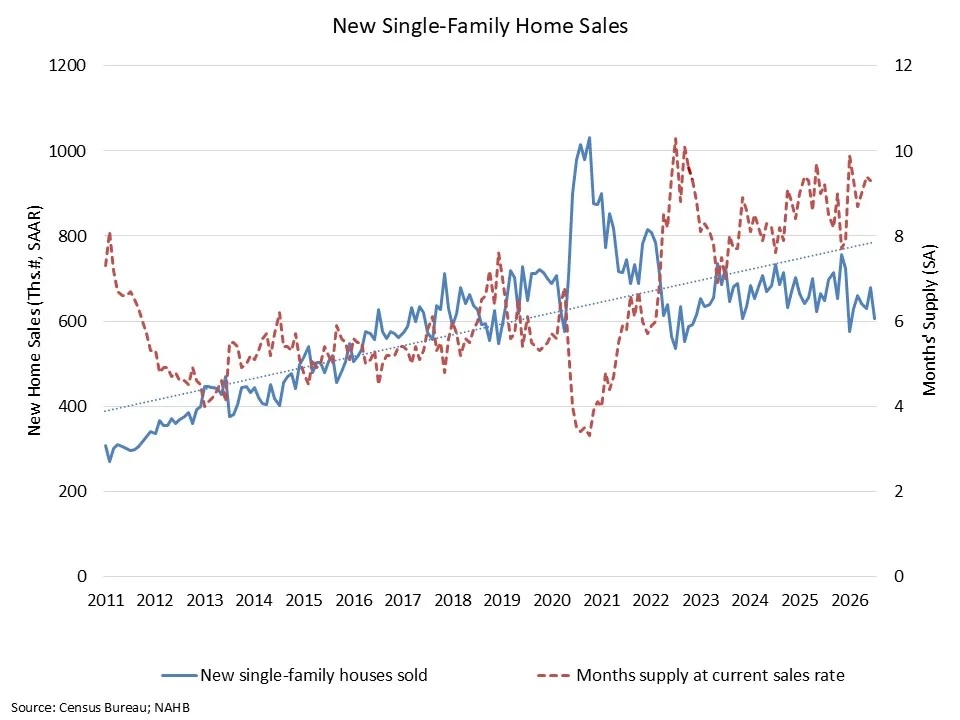
    The U.S. Census Bureau released the delayed Monthly New Residential Sales report for both September and October 2025.The September data reports a seasonally-adjusted annual rate of 738,000 and an October a rate of 737,000. Despite not much month to month change there is a significant 18.7% year over year increase.

    This data suggests a brighter future for the 2026 outlook. The period of September-October 2025 is now the strongest two-month stretch for new-home sales since early 2022.

    While the median sales price of new homes was 405,800 and $392,300 in September and October respectively. This is a eight percent decrease from the October 2024 price of $426,300. Yet this decrease is not surprising with many builders offering incentives and mortgage rate buydowns alongside lower prices.

    The release of the November data is still to be determined by the U.S. Census Bureau.

    Read More 


Sorry, but nothing was found. Please try a search with different keywords.

Sorry, but nothing was found. Please try a search with different keywords.

Sorry, but nothing was found. Please try a search with different keywords.


Sorry, but nothing was found. Please try a search with different keywords.