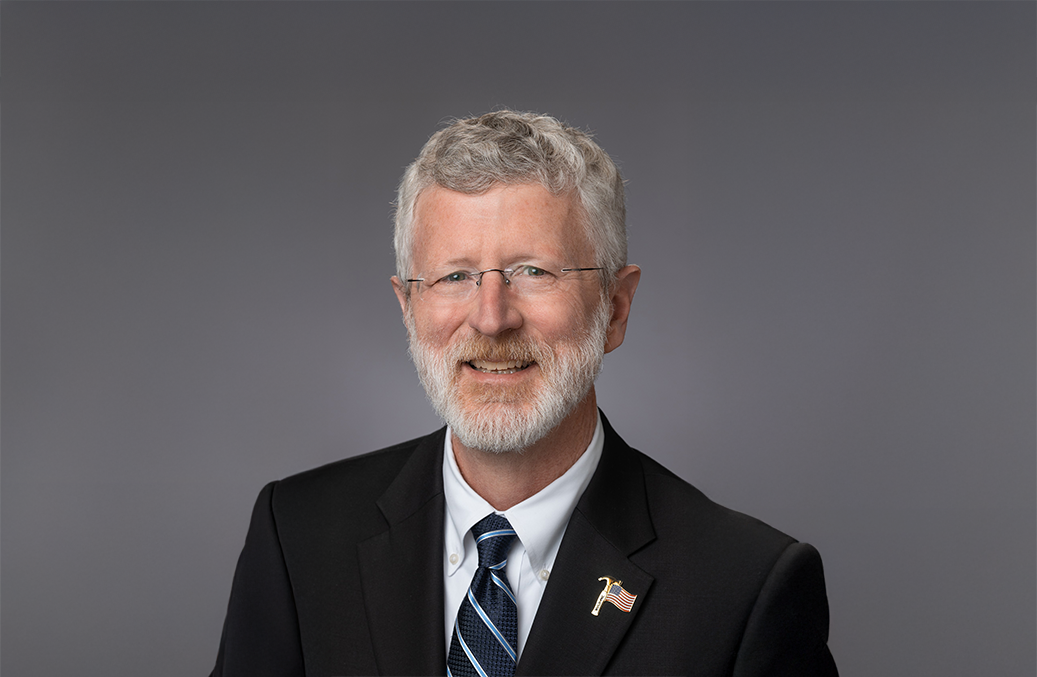
Bill Owens shares his plans for the NAHB, the largest homebuilder association in the U.S.
Builder and Developer: Could you tell us about your journey in the home building and construction industry and how it led to this prestigious position?
Bill Owens: My career in the industry actually began when I was still a student, more than 40 years ago. I started doing small remodeling projects for profit when I was in college at Miami University (Ohio) and that led directly to the creation of my family’s remodeling company, Owens Construction. My wife, Besty and I started it just two years after graduation and have worked ever since to make it grow.
I believe that a key to success in this industry is to always be learning.
That led me to seek several NAHB certifications, including Certified Graduate Remodeler, Certified Aging-in-Place Specialist and Certified Green Professional. I’m also a member of Harvard University’s Joint Center for Housing Studies Remodeling Futures Steering Committee and I have worked with non-profits such as the Better Living Design Institute and Partners for Community and Character.
I’ve been very involved with the NAHB federation at the local, state and national levels over the years. From 1997 to 2005, I served on the board of trustees of the Building Industry Association of Central Ohio, where I was recognized as Remodeler of the Year in 1999, 2000 and 2003 and as Builder of the Year in 2009. I served as president of the Ohio Home Builders Association in 2011 and I am I life member of the board there.
I’ve served as chairman of the NAHB Remodelers Council, the Home Builders Institute and the NAHB Leading Suppliers Council. I’ve also served as vice chairman of the Home Innovation Research Labs, which is a wholly-owned subsidiary of NAHB.
In short, I’ve been a remodeler and builder my entire adult life and I’ve been very involved in all levels of the NAHB federation for decades.
B&D: You are the first full-time remodeler to serve at this level, how will this perspective shape your role?
BO: I’m a remodeler first. Most of my career has been focused on design-build remodeling, and I’m excited to expand NAHB’s outreach to professionals in that dynamic, high-growth sector. But I have also built homes, so I understand that side of the industry and the challenges that home builders face.
We are a heavily regulated industry. Policy advocacy is a very important part of what NAHB does at the national level and what the NAHB federation does at all levels of government. So I want to maintain NAHB’s emphasis on the strength and quality of its advocacy.
The vast majority of our members don’t join NAHB at the national level. They join a local home builders association and that makes them a member of their state association and a member of NAHB. That’s why it’s critical that we communicate to our members across the country the value of NAHB and the important work we do on their behalf at the federal level. It’s also critical that NAHB support local and state advocacy efforts. Because that’s where the rubber hits the road. All home building is local, you might say.
Whether you’re a home builder, a remodeler, a land developer or just someone whose business thrives when the housing industry thrives, the policy environment in which you operate has a huge impact on your business. NAHB’s advocacy team fights for the residential construction industry.
At any given time, we are working on scores of issues that affect our members. The outcome of those efforts can have a significant impact on your bottom line. I want more people in our industry to understand the stakes and the value of NAHB advocacy.
B&D: As Chairman of the Board of the National Association of Home Builders (NAHB), what does the future of home building look like to you?
BO: I want to spend my time as a senior officer, and this year as chairman, making sure NAHB is well structured to serve the home building and remodeling industry. We need to grow as an association. We need to engage more members. We need to develop the next generation of leaders.
I’m excited to work with our current senior officer team, with other federation leaders and with the NAHB staff to push NAHB forward. NAHB will be 100 years old in just 16 years. So we are putting the work in now to make sure NAHB is not just relevant, but stronger, when it gets to that 100-year mark.
We’re going to take a fresh approach to how we listen to our members, our local leaders, and our HBA executive officers. Let the members speak their minds while we listen and take note. Because what’s best for our members and their local associations is what’s best for us to act upon at NAHB.
I want to make sure that NAHB membership is relevant, accessible and aspirational.
I see three big questions: Are we who we need to be to get the job done? Are we organized in such a way to do what must be done? Do we have the courage and are we willing to make the decisions our future requires? This is about how NAHB best serves the men and women who go to work every day, building homes for American families.
B&D:NAHB recently recorded an advocacy win for housing availability and affordability in the federal courts. How are you planning to continue this success in other areas and on the national level?
BO: You’re talking about the case of the case of Utah versus the Department of Housing and Urban Development, in which a federal district court judge in Texas ruled that HUD and the Department of Agriculture cannot impose the 2021 International Energy Conservation Code (IECC) and the 2019 ASHRAE 90.1 standard on key housing programs. HUD’s application of the energy-code requirement to FHA mortgages was a back door way to federalize a 2021 IECC requirement. The policy would have taken away affordable financing options from the very people the FHA and USDA programs are intended to help. That case is just one recent example of NAHB’s advocacy efforts on behalf of members.
NAHB has a deep advocacy team working on a wide range of issues, including workforce development, environmental and safety regulations, energy and building codes, housing finance rules, independent contractor, overtime and other labor issues, impact fees, zoning rules and other land development concerns, tax policy, materials prices and supply chain concerns – and the list goes on.
And NAHB works every issue from multiple angles – legislative, regulatory, legal. We also have a deep bench of expert economists crunching the numbers on the effects of laws and regulations, as well as a communications staff that helps explain our policy positions to lawmakers, the media and the public. We work to shape the legislation that affects our industry. Once laws are on the books, we work with the regulatory agencies to make sure industry concerns are addressed. And if new laws and regulations are overly burdensome, then we seek remedy in the courts.
The outcome in the HUD-IECC case was a legal victory. But often our victories occur in the legislative arena or in the regulatory process. NAHB works every angle to produce a pro-housing, pro-business policy environment.
B&D: You served on many roles in the organization including as Vice Chairman at the Housing Innovation Research Labs and led the Environmental Issues committee. What programs would you like to see to help green builders and remodelers tackle high performance home building more affordably and efficiently?
BO: I’d like to see much broader industry adoption of the National Green Builder Standard (NGBS). It is the only residential green building rating system approved by the American National Standards Institute (ANSI) as an American National Standard. It applies to all types of residential construction, including single-family homes, apartments and land development, as well as remodeling. Home Innovation Research Labs, as you know, serves as the secretariat for the ICC 700 National Green Building Standard. NGBS offers a comprehensive, flexible framework to design, build and certify homes and multifamily buildings to higher standards of efficiency, sustainability and performance. What really sets the NGBS Green apart is the rigorous third-party verification that underpins every certification. Independent NGBS Green Verifiers conduct on-site inspections and documentation review to ensure that buildings meet the rigorous requirements of the standard. That quality assurance process gives developers, owners, and lenders confidence in the integrity of the certification—and in the performance of the building itself.
Another important factor is how well the NGBS supports builders in their efforts to meet and exceed evolving energy codes and sustainability expectations. It’s a proactive tool that helps builders stay competitive, not just compliant. We are fast approaching 700,000 certifications under NGBS and that’s great. But I’d like to see a lot more. The 2025 edition of the standard is expected to be published in the next few months. I think the 2025 edition will build momentum by offering even more flexibility, aligning more closely with emerging code requirements and providing a clear path for builders, developers and remodelers who want to remain competitive in this very performance-driven housing market.
B&D: What advice would you give to builders and remodelers navigating the current market?
BO: Always be striving to improve. As an important part of that, I would say that if you are not already a member of a local home builders association, then that is one of the most important things you can do to strengthen your business.
If you look at any local market in the country, you’ll find that most of the biggest, most successful residential construction firms are usually members of the local association in that market.
If you are a member of your local association, then you are also a member of the state association and NAHB. Those three organizations give you tremendous three-in-one policy advocacy at the local, state and national levels. You also get access to outstanding educational programming and access to a network of seasoned housing industry professionals.
I strongly recommend you attend the International Builders’ Show. That will be in Las Vegas, Feb. 2-4, 2027. It is the single most important event to attend to acquire the ideas that will help you build better homes and build a better business.
Aside from that, I would say take the time and effort to hire excellent people. Take care of your people and investment in them, so they’ll be proud members of your team well into the future.
This is the full interview, read the print version in B&D April.