











A well-designed space speaks to our soul. It engages all of our senses. That belief has shaped my approach to design from the very beginning.
At Ueda Design Studio, we create homes that are modern, minimal and defined by clean lines, while also fostering a strong relationship with nature. I am drawn to spaces that feel modest yet beautiful, poetic yet comfortable, elegant yet playful. I find beauty in simplicity and in the richness of natural materials. Rather than trying to overpower nature, I prefer to work with it: to invite the view in, the sun, the shadows, the wind and to celebrate the changing seasons.
I am also fascinated by how a home unfolds through movement and contrast. Not every room needs to be large. In fact, varying the size, scale and sequence of spaces can make a home far more interesting and memorable. A narrow, darker hallway can heighten the feeling of entering a bright, expansive room with sweeping views. I also try to connect interior spaces to gardens and landscapes whenever possible. If there is no garden, I may borrow the view of a neighbor’s garden. If there is no nearby greenery at all, I look to the sky. Constraints are never just problems to solve; they are often where the design begins.
My understanding of architecture was deeply influenced by growing up in and around traditional Japanese houses. What I learned from those spaces was not simply a style, but a way of thinking. To me, Japanese architecture is something you feel rather than simply see. It is carefully composed to heighten awareness of nature, the beauty of materials and the subtle play of light and shadow, all within a clear functional balance. Spaces unfold gradually, almost like a journey and are experienced with both body and mind.
My path into architecture was not a straight one. I studied business in college and worked as a stock analyst in Tokyo in my twenties. Through my work and my travels, I encountered many kinds of architecture around the world. Over time, I became increasingly moved by the power of space and began to imagine what it would mean to create places like the ones that had stayed with me. Later, a series of life-changing events made me realize how deeply the built environment affects our daily lives, both physically and emotionally.
I also became more aware of how many spaces are designed primarily for healthy people, but not enough for those who are healing, aging, sick or otherwise vulnerable. That realization gave me a strong desire to design spaces that support people more fully; places that can make us feel happier in good times, help us heal and find peace in difficult ones. That purpose still guides my work today.
After working at Olson Kundig in Seattle, where I learned high-end residential design, I started my own practice in 2016. At the time, I wondered whether I could really succeed on my own as a Japanese female architect building a practice in the United States. However, contrary to those early concerns, the parts of my identity and experience that once felt like obstacles have become some of my greatest strengths. Being a Japanese architect in the U.S., having worked in another field before architecture and being a mother of three all shape the way I see design. They allow me to approach each project from multiple perspectives, with empathy, curiosity and a broader understanding of how people live.
Sustainability is also central to our practice. I believe every home should respect the environment, protect health, conserve energy and endure for generations. That requires both sound building science and timeless design principles. But sustainability is not only technical; it is also emotional. A truly sustainable home is one that people love, care for and want to preserve for years. I believe homes should serve the needs of today while also anticipating how life may change over the next ten, 20 or 50 years. A home should age with dignity, growing richer and more meaningful over time. That long view shapes both the way we design and the materials we choose.
I am also passionate about remodeling because it requires understanding an existing structure, uncovering its character and weaving the old and the new into a coherent whole. It can be more challenging than new construction, but also deeply rewarding.
At a time when so many older homes are demolished and replaced by buildings with little character, thoughtful remodeling feels especially important. It saves resources, reduces waste and honors the craftsmanship and stories already embedded in a place. That is also an essential part of residential architecture.
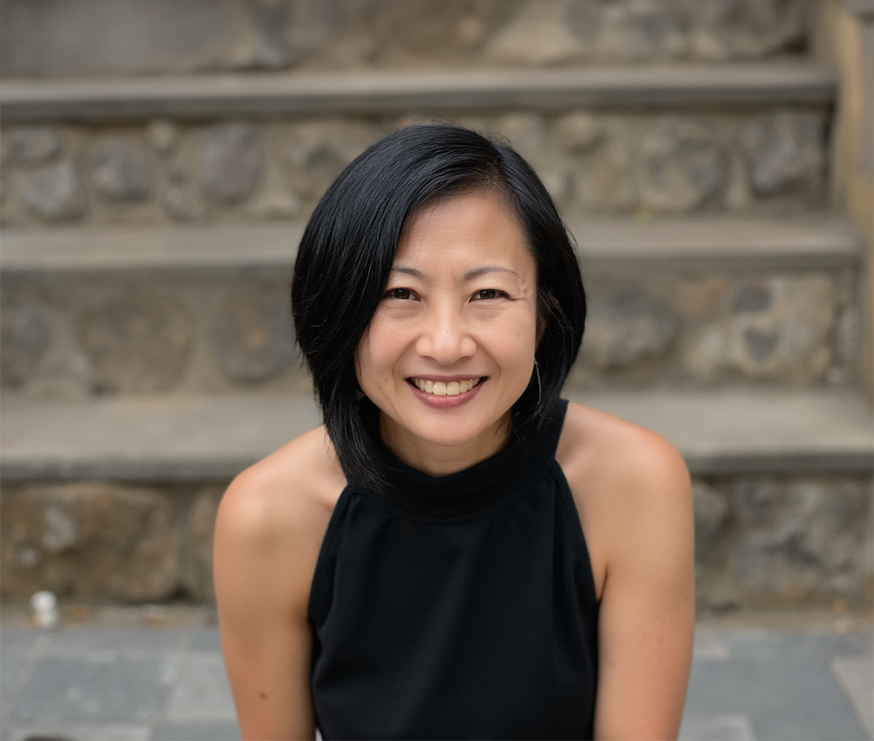
Nahoko Ueda, AIA, is the Principal of Ueda Design Studio. She can be reached at nahoko@uedads.com
This column is featured in our June issue of Builder and Developer. Read the print version.