



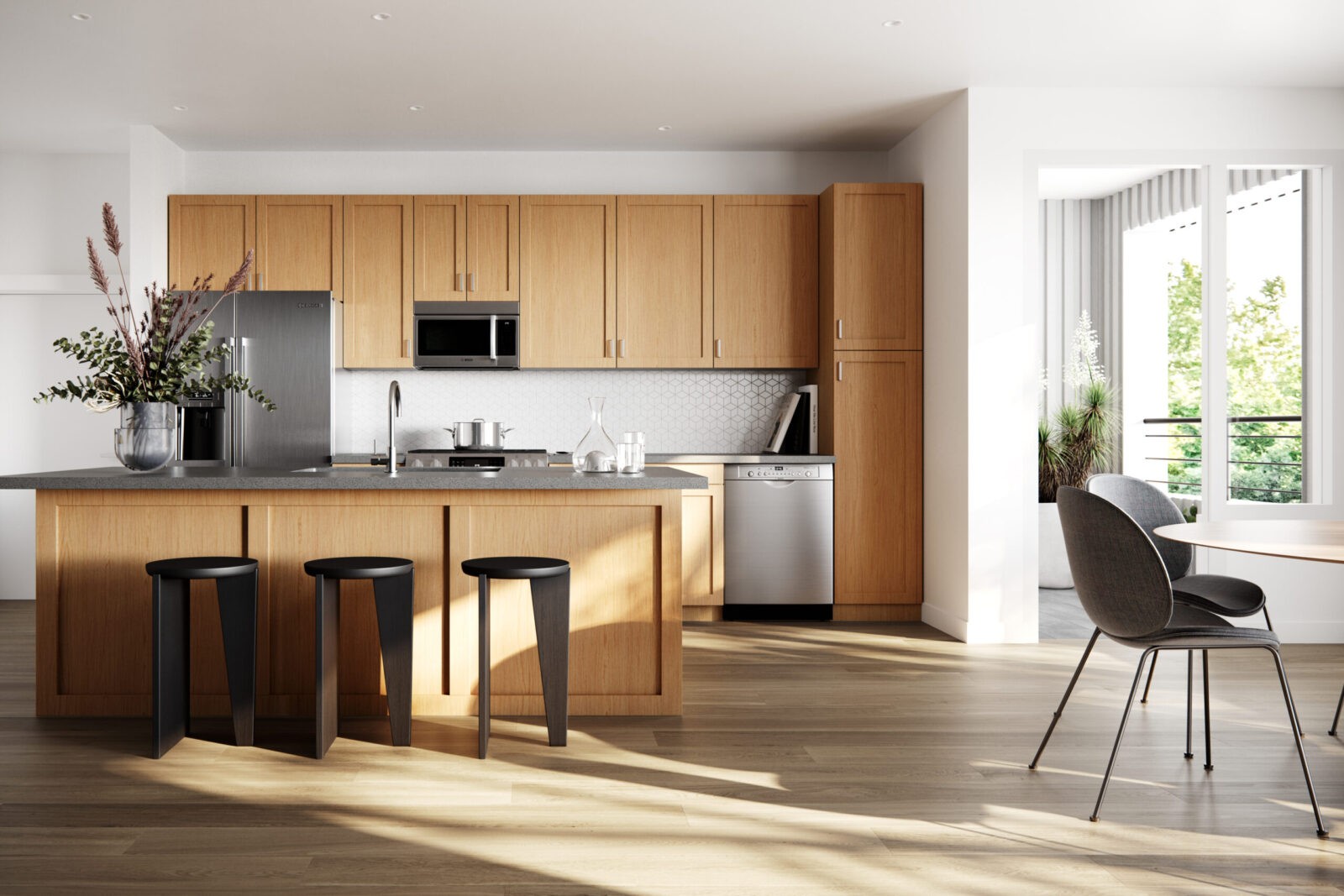





Wellness, sustainability and resilience are emerging as key priorities in residential kitchen design, according to the National Kitchen & Bath Association’s (NKBA) 2027 Kitchen Trends Report. The findings point to growing interest in features that support healthier indoor environments, improved safety and greater household efficiency. Ventilation systems, water filtration, leak detection, automatic shutoff valves, backup power and air filtration are increasingly influencing kitchen planning alongside traditional considerations such as cabinetry, appliances and finishes.
The report reflects a broader shift in homeowner expectations, with kitchens evolving beyond spaces for cooking and entertaining into environments that support everyday wellness and long-term functionality. As consumers place greater emphasis on indoor air quality, water quality and home resilience, builders and designers have opportunities to incorporate these features into new construction and renovation projects. Integrated technologies and thoughtful design solutions are also helping connect kitchen performance with overall home comfort and efficiency.
For the residential construction industry, these trends highlight the growing importance of balancing aesthetics with practical performance. As kitchen design continues to evolve, builders, architects and product manufacturers are increasingly challenged to deliver spaces that meet changing lifestyle preferences while supporting durability, safety and long-term value. The findings suggest that wellness-focused features and resilient building solutions will play an increasingly important role in shaping kitchen specifications and residential design decisions in the years ahead.