Housing Economy

Latest news in the housing economy


  • Less young adults are first-time homebuyers

    Less young adults are first-time homebuyers

    According to a report from First American, young adults are the missing gap in first-time homebuyers. Nearly half of 20-to 24-year-olds still lived with their parents in 2025. Only about 25% of 25-to 29-year-olds owned their homes.

    The reality is that homeownership is arriving later in life for young adults, with the delay often originating at moving out of their childhood homes.

    Young adults are moving through traditional markers of adulthood, such as moving out, work, marriage and children, on a different timeline than previous generations. As those milestones shift, the housing sequence that often follows,  moving out, renting and buying, also shifts.

    Most young adults are still renting. While today’s renters are likely to become tomorrow’s buyer, that “tomorrow” is happening later in life. The reasons for this vary between affordability challenges, as well as other life milestones that have shifted into the later years, such as school, work or family.

    Read Full Article

  • Average homebuyer’s down payment decreases

    Average homebuyer’s down payment decreases

    According to a new Redfin analysis, the average homebuyer’s down payment is down from last year, falling to $64,000 in March 2026, down 1.5% year-over-year. The average down payment was 15%, down from 16.1% in 2025.

    Down payment percentages were highest in three California metros: San Jose, San Francisco and Anaheim, all at 25% each.

    Down payments were lowest in Virginia Beach at 2% and Detroit at 5%, which are both considered affordable markets.

    The data in the report is from an analysis of county records across 40 of the most populous U.S. metropolitan areas. March 2026 is the most recent month for which data is available.

    Read Full Article

  • Cotality reports June U.S. home price insights

    Cotality reports June U.S. home price insights

    Cotality released the June 2026 U.S. home price insights. The report found that overall, the year-over-year home price increase remains relatively steady at 0.4%. However, the recent surge in mortgage rates has disrupted the spring homebuying season and reversed some of the affordability gains created by the lower rates seen throughout 2025.

    “Market strength suggests that some buyers remain insulated from mortgage-rate volatility and are supported by substantial home equity and stock market gains,” said Cotality Chief Economist Dr. Selma Hepp. “Meanwhile, markets that depend more heavily on traditional mortgage financing and rate-sensitive buyers are seeing prices stay relatively flat. Overall, fewer markets posted year-over-year price declines in April than in prior months, pointing to continued stabilization across the housing market.”

    Read Full Article


  • Housing affordability increases in Q1 2026

    Housing affordability increases in Q1 2026

    Housing affordability conditions for first-time and entry-level buyers are improving at a reasonable pace. According to the National Association of Home Builders’ (NAHB) Wells Fargo Cost of Housing Index (CHI), in Q1 of 2026 the income share needed to buy a new home dropped 4% from Q2 2025.

    Despite mortgage rate changes and overall economic uncertainty, this exhibits promising signs for housing affordability for everyday Americans. The trend continues to existing homes, where income share needed to purchase dropped from 37% in Q2 2025 to 32% in Q1 2026.

    “The U.S. data for the percentage of earnings needed to purchase a new home in the first quarter is based on a national median new home price of $403,200 and median income of $106,800, said Rose Quint, assistant vice president for survey research at NAHB. “The first quarter median new home price is down slightly from $405,300 in the fourth quarter of 2025.”

    Read More 

  • Pending home sales see 1.4% increase

    Pending home sales see 1.4% increase

    According to a report from the National Association of Realtors (NAR), the spring housing market saw a slight bump in activity in April, as pending home sales increased by 1.4% since March. Pending sales increased in the Northeast, Midwest and West, but declined in the South. Year-over-year pending home sales rose in the Midwest, South and West, but declined in the Northeast.

    The report, released on May 19, 2026, follows the release of data indicating that the National Association of Home Builders/Wells Fargo sentiment index notched a 3-point gain in May.

    “Buyers are coming out with cautious optimism despite increasing economic uncertainty and a slight rise in mortgage rates,” said NAR Chief Economist Lawrence Yun. “Demand will easily be even higher once mortgage rates retreat to the levels they were at earlier this year.”

    Read More

  • U.S. home prices rose 0.2% in April

    U.S. home prices rose 0.2% in April

    U.S. home prices rose 0.2% month over month in April on a seasonally adjusted basis and climbed 2.1% year over year. The Redfin Home Price Index, which uses the repeat-sales pricing method to calculate seasonally adjusted changes in single-family home prices, found that, overall, improving homebuyer demand could fuel further price gains in the coming months.

    “An improving labor market is buoying homebuyer demand, which is keeping home price growth afloat,” said Redfin Senior Economist Asad Khan. “Even though prices are rising, buyers still have bargaining power because they’re outnumbered by sellers. If housing demand keeps climbing, sellers may regain some of that power, causing home prices to rise further.”

    In Montgomery County, Pa., home prices climbed 2.5% month over month on a seasonally adjusted basis in April; the biggest increase among the U.S. metropolitan areas.

    Read More

  • Housing market shows signs of stabilization

    Housing market shows signs of stabilization

    According to a recent Redfin analysis, the housing market is beginning to show signs of stabilization. Approximately 35.4% of U.S. home sellers cut their asking price in April 2026 as an incentive to attract homebuyers. This marks a slight decrease from 35.6% in March and down from a record high of 36.6% in August 2025.

    Price cuts have become slightly less common due to the housing market beginning to stabilize. Homebuyer demand is rising, which is helping sellers regain negotiating power. In response to an improving job market, homebuyers are beginning to return. Although buyers are still slightly outnumbered by sellers, which prompted sellers to lean more into incentives, they are less so than before, indicating a shift in the power balance.

    Read More

  • Southern California Housing Market Forecast

    Southern California Housing Market Forecast

    According to the California Association of REALTORS, March 2026 showed fluctuating patterns for existing, single-family homes across the state. Across Southern California, there was a 3% increase in year-over-year home sales. The median home price saw a 0.3% increase year-over-year, reaching around $880,000 in March.

    While a modest gain, it indicates that prices are no longer skyrocketing or falling significantly. Overall, it is a sign of a market that is trying to find its equilibrium.

    Looking toward the rest of the year, prices are expected to continue their trend of modest, steady growth. If economic conditions continue to stabilize, inflation remains in check and if mortgage rates begin to ease consecutively, sales volume could see an uptick.

    Read More

  • Residential construction material prices are up

    Residential construction material prices are up

    According to the most recent Producer Price Index (PPI), input prices for residential construction rose in April. Various factors are raising costs around the U.S., but particularly for the residential market energy prices are at the forefront.

    The PPI for final demand rose 1.4% in April following a 0.7% increase in March. Excluding energy prices rising, building materials are also up 3.7% from a year ago. Apart from goods, services also saw a significant incline from a year ago.

    “Long-distance motor carrying service prices rose 10.4% in April and were 18.3% higher than a year ago, while local motor carrying service prices rose 1.4% in April and were 6.3% higher than a year ago,” said Jess Wade, economist and director of tax and trade policy analysis at the National Association of Homebuilders. “These are the two transportation services that are represented as inputs in the residential construction price index.

    Read More 


  • Pending home sales climb to the highest level since 2023

    Pending home sales climb to the highest level since 2023

    In April, pending home sales hit the highest level since February 2023, rising 2% from the month before. This is the largest increase since March 2025. Existing home sales also climbed to a seasonally adjusted annual rate of 4.33 million, the highest level since February 2023.

    The median U.S. home sale price rose 2.4% year-over-year in April to $396,173, the biggest increase in 13 months, as house hunters came off the sidelines amid a stabilizing job market. The April jobs report showed an increase in hiring, which likely helped boost housing demand.

    “Homebuyer demand increased significantly at the end of March following a relatively quiet period in January and February,” said Dawn Kane, a Redfin Premier real estate agent working in both Maryland and Pennsylvania. “This is the first time post-pandemic I’ve felt the frenzy and comeback of a true spring market.”

    Read More

  • Housing market power begins to shift

    Housing market power begins to shift

    For months, the balance of power in the U.S. housing market has been shifting. Now, the negotiating power that was once held by buyers is shifting. There were an estimated 46.5% more home sellers than buyers in the U.S. housing market in April 2026, down from 47.5% the month before and a high of 48.9% in December 2025. While the current housing market is still slightly leaning in favor of homebuyers, it is no longer a strengthening homebuyers market, indicating a possible shift towards balance.

    “Homebuyer demand has been dwindling for months, but finally ticked up in April thanks to a strengthening job market and declining recession risk,” said Redfin Senior Economist Asad Khan. “More house hunters entering the market helped narrow the gap between the number of buyers and sellers. If the number of buyers continues to grow, more homeowners may see it as an opportunity to list their homes, helping bring the market out of this deep freeze.”

    There were an estimated 1 million homebuyers in the market in April, up 2% from March; the largest increase in 13 months. Meanwhile, there were an estimated 1.5 million sellers in the market, up 1.3% month over month, marking the largest increase in a year.

    Read More

  • Senate confirms new Federal Reserve chair

    Senate confirms new Federal Reserve chair

    On May 13, 2026, the U.S. Senate confirmed Kevin Warsh as the next chairman of the Federal Reserve.  The 54-45 vote, mostly along party lines, marks the return of Warsh to the Fed where he previously served on the Board of Governors from 2006 to 2011. Warsh will replace the current chair Jerome Powell, he has led the Federal Reserve since 2018.

    Previous to his new position, Warsh served as the Shepard Family Distinguished Visiting Fellow in Economics at the Hoover Institution at Stanford University. He  was also a lecturer at the Stanford Graduate School of Business. Many housing economists predict the next action from the Fed might be a rate hike instead of a cut.

    “A Warsh-led Fed matters for housing less because of where rates are today and more because of how policy is communicated going forward,” said Cotality Chief Economist Dr. Selma Hepp. “For housing, that likely means fewer sharp policy pivots but a longer period of rate uncertainty. Current assessment is that Warsh could lean modestly more dovish over time — anchored by productivity optimism — offers some hope that policy won’t remain overly restrictive if inflation continues to cool. However, his skepticism of an oversized balance sheet and openness to rethinking Fed communication tools could keep mortgage rates volatile even if the policy rate trends lower. The risk for housing is that affordability remains trapped: rates may ease only gradually while prices stay elevated due to limited supply. The opportunity, if Warsh succeeds in restoring Fed credibility, is a steadier long‑term financing environment that allows builders, lenders and buyers to plan with greater confidence.”
  • Mortgage rates average 6.37%

    Mortgage rates average 6.37%

    On May 7, 2026, Freddie Mac released the results of its Primary Mortgage Market Survey, showing the 30-year fixed-rate mortgage (FRM) averaged 6.37%. This is up from last week, when it averaged 6.30%. A year ago at this time, the 30-year FRM averaged 6.76%.

    “Recent data points to slightly better conditions for buyers with a boost in new-home sales, median new-home prices being down to their lowest level since July 2021, and higher inventory than in recent years,” said Sam Khater, Freddie Mac’s Chief Economist. “Together, these trends could modestly ease affordability pressures through the spring home buying season.”

    The 15-year FRM averaged 5.72%, up from last week when it averaged 5.64%. At the same time last year, the 15-year FRM averaged 5.89%.

    Read More

  • New York’s housing plan delivers record-breaking progress

    New York’s housing plan delivers record-breaking progress

    On May 5, 2026, New York Governor Kathy Hochul announced record-breaking progress toward the state’s five-year housing goal, with more than 22,000 affordable homes created or preserved during Fiscal Year 2025-26. This marks the highest single-year production for Hochul’s five-year housing plan.

    New York State Homes and Community Renewal has financed the creation or preservation of more than 81,000 affordable homes over the first four years of the housing plan, putting the state on track to meet its goal of 100,000 affordable homes ahead of schedule.

    “New York is tackling the housing crisis head-on by building more homes, faster and making our state more affordable for families,” said Hochul. “This record-setting year complements my Let Them Build initiative and shows what’s possible when we combine smart policy with strong investment. We’re going to keep pushing forward to ensure that every New Yorker has access to a safe, affordable place to live.”

    Read More

  • Home sales see an increase over two consecutive months

    Home sales see an increase over two consecutive months

    Sales of new U.S. single-family homes increased this year for two consecutive months, in February and March, just in time for the spring buying season. New home sales surged 7.4% to a seasonally adjusted annualized rate of 682,000 units in March. Sales ​increased to a rate of 635,000 units in February from 583,000 ​units in January, when they were weighed down by harsher weather conditions in the winter months.

    Despite the strong sales in March and February, new housing inventory remained high, indicating that the housing market remains in the homebuyer’s favor. With supply still elevated, the ​median new house price dropped 6.2% to $387,400 in March from a year earlier. Builders are continuing to offer incentives to attract homebuyers.

    Read More


  • Housing’s share of the GDP falls below 16%

    Housing’s share of the GDP falls below 16%

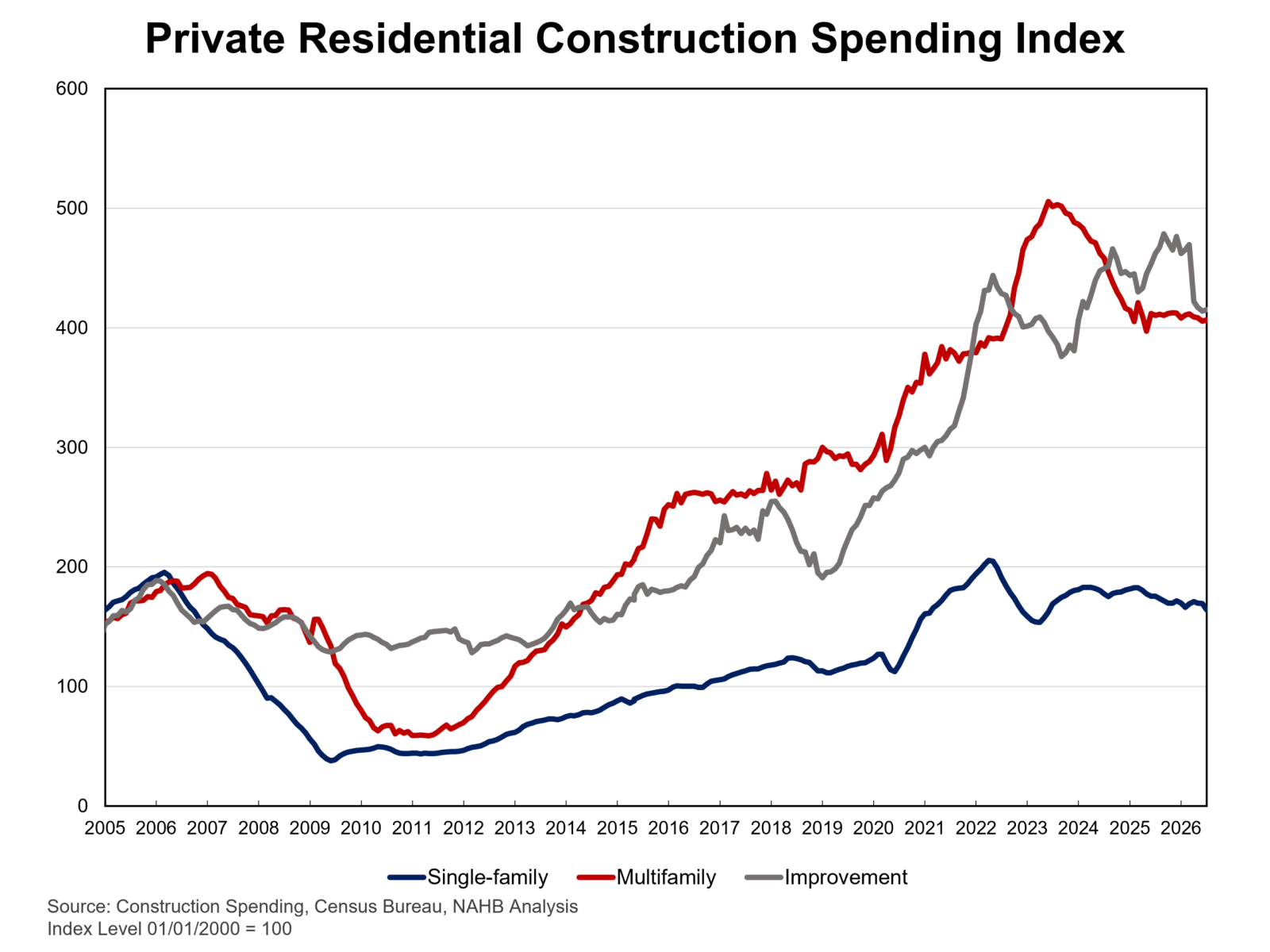
    According to the most recent GDP estimates from the Bureau of Economic Analysis, Q1 of 2026 recorded housing’s share of the economy at 15.9%. This is reportedly the lowest share since 2019 and it is down .6% from a year ago. Residential Fixed Investment (RFI) was 3.7% of the economy, recording a $1.2 trillion seasonally adjusted annual pace. While the single-family RFI fell 8.2%, the multifamily RFI rose 1.9%.

    “Residential construction, measured by residential fixed investment, fell at its fastest pace in over three years, while household expenditures on housing services continued to remain steady,” said Jess Wade, economist and director of tax and trade policy analysis at the National Association of Homebuilders. “However, the housing share of GDP lagged during the post-Great Recession period due to underbuilding, particularly in the single-family sector.”

    Read More 

  • Montana leads the nation in increasing housing supply

    Montana leads the nation in increasing housing supply

    On April 29, 2026, Montana Governor Greg Gianforte announced that a new report from the National Association of Home Builders revealed Montana is leading the nation as the state with the highest year-over-year increase in single-family home permits. Gains in the housing supply ranged from 25.5% in Montana to 0.4% in Washington.

    “In Montana, we are seeing the results of our work to increase the supply of affordable, attainable housing,” said Gianforte. “By streamlining local government permitting, homebuilders are able to more quickly respond to the demands of our growing communities.”

    Read More

  • Mortgage rates average 6.30%

    Mortgage rates average 6.30%

    On April 30, 2026, Freddie Mac released the results of its Primary Mortgage Market Survey, showing the 30-year fixed-rate mortgage (FRM) averaged 6.30%, up from last week’s average of 6.23%. In April 2025, the 30-year FRM averaged 6.76%.

    “As rates had modestly declined the last few weeks, purchase demand has accelerated with purchase applications rising to over 20% above a year ago,” said Sam Khater, Freddie Mac’s Chief Economist. “It is clear that purchase demand continues to hold up as prospective buyers react to both modestly lower rates and more inventory to choose from than the last few years.”

    Read More

  • Homebuying demand rises as mortgage rates decrease

    Homebuying demand rises as mortgage rates decrease

    U.S. pending home sales rose 2.7% year-over-year in April 2026, the biggest increase in six weeks, while mortgage-purchase applications have risen to their highest level in three months. Additionally, the weekly average mortgage rate has dropped to 6.23% from a seven-month high of 6.46% at the start of April, pushing the median monthly housing payment down 2.2% year-over-year.

    New listings rose 2.2% year-over-year, the second week of increases after five consecutive months of declines.

    “Even though more buyers are coming off the sidelines, some are still wondering if they should wait for mortgage rates to fall more before making a move. I tell them no…make an offer,” said Sue Dhillon, a Redfin Premier agent in Seattle. “It is a buyer’s market, but there is competition for desirable homes in popular neighborhoods.”

    Read More

  • Homebuilding shows signs of stabilization

    Homebuilding shows signs of stabilization

    Housing construction activity strengthened in March, with a notable rebound in both single-family and multifamily starts, signaling improved builder activity despite ongoing headwinds from financing costs and affordability constraints. According to a report from the U.S. Department of Housing and Urban Development and the U.S. Census Bureau, overall housing starts increased 10.8% in March to a seasonally adjusted annual rate of 1.5 million units.

    While the monthly gain points to renewed momentum, year-to-date trends remain mixed, particularly in the single-family sector, while permit activity suggests some caution moving forward. Within the total, single-family starts increased 9.7% to a seasonally adjusted annual rate of 1.03 million units and are up 8.9% compared to March 2025.

    Read More

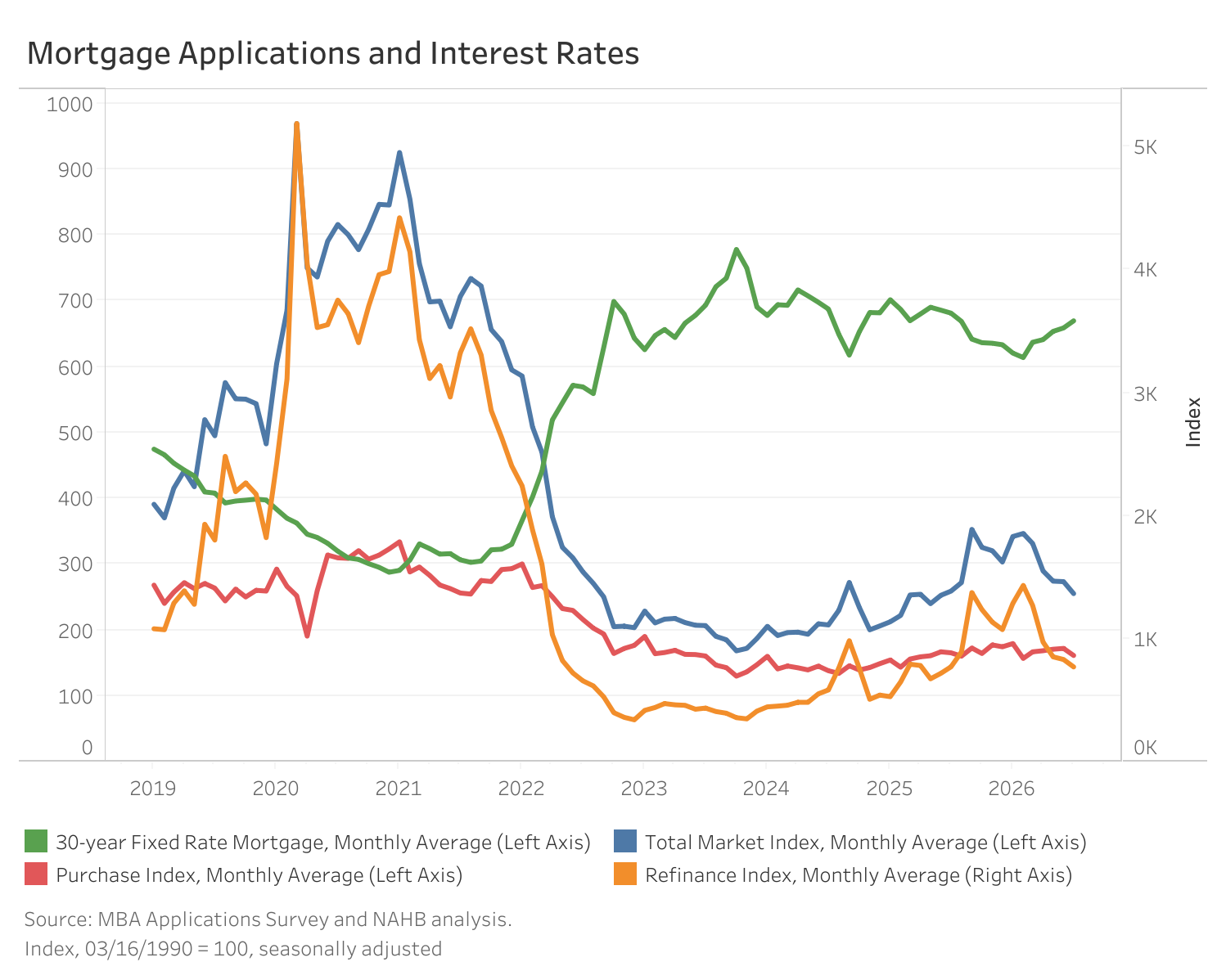
    Graph credit: NAHB

  • Rhode Island homebuilding gains momentum

    Rhode Island homebuilding gains momentum

    Rhode Island’s commitment to building new homes has gained traction over the last year. According to the latest integrated housing report released on April 15, 2026, by the state’s Executive Office of Housing, 3,778 building permits were issued across municipalities within Rhode Island in the last year, the highest level since the 1980s.

    “These numbers show consistent, meaningful progress year after year,” said Governor Dan McKee. “We’re seeing the results of our efforts with the General Assembly to work with cities and towns, remove barriers to development and make historic investments in housing.”

    Read More


  • John Burns releases first quarter recap

    John Burns releases first quarter recap

    On April 17, 2026, John Burns Research & Consulting (JBREC) released its recap of the first quarter, from housing bills to looking ahead towards the rest of the year’s outlook.

    Each quarter, the company partners with Kiavi to survey approximately 400 to 500 fix-and-flip investors nationwide on market conditions, investor sentiment and their near-term outlook. JBREC expects fix-and-flip activity to grow in 2026, driven by three key factors: Price stabilization, lower financing costs and new tax deductions for renovation expenses.

    The organization expressed concern for the proposed 21st Century ROAD to Housing Act, which aims to make housing more affordable, but includes provisions that could make housing more expensive.

    Read More

  • Cotality reports national home price insights

    Cotality reports national home price insights

    Heading into the spring homebuying season, annual price appreciation slowed to a marginal 0.5% in February 2026. This signals that the U.S. housing market has collided with an affordability ceiling. While this price growth indicates a market at a standstill, it hides a massive internal rebalancing as different regions and property types move in opposite directions. The current housing market is defined by a sharp divide in performance, both nationally and within specific regions.

    “These diverse trends indicate an ongoing process of price discovery—one where sales and comparisons remain limited—and underscore a market that is rebalancing locally rather than correcting nationally,” said Cotality Chief Economist Dr. Selma Hepp.

    Hepp added that the decrease in mortgage rates before the spring buying season raised hopes for a rebound in home prices and sales in 2026, but that the recent surge in rates has shifted those hopes to a broader recovery in 2026.

    Read More

  • NAHB releases population growth and housing supply data

    NAHB releases population growth and housing supply data

    According to the latest Vintage 2025 population estimates from the U.S. Census Bureau, the U.S. population growth slowed notably, with the nation expanding by just 0.5% in 2025. This was roughly half the pace of the prior year. The deceleration was primarily driven by a sharp decline in net international migration, which dropped from 2.7 million to 1.3 million, while natural change remained relatively stable.

    Population gains remained concentrated in the South and parts of the West, while many areas in the Midwest and Northeast experienced slower growth or population declines.

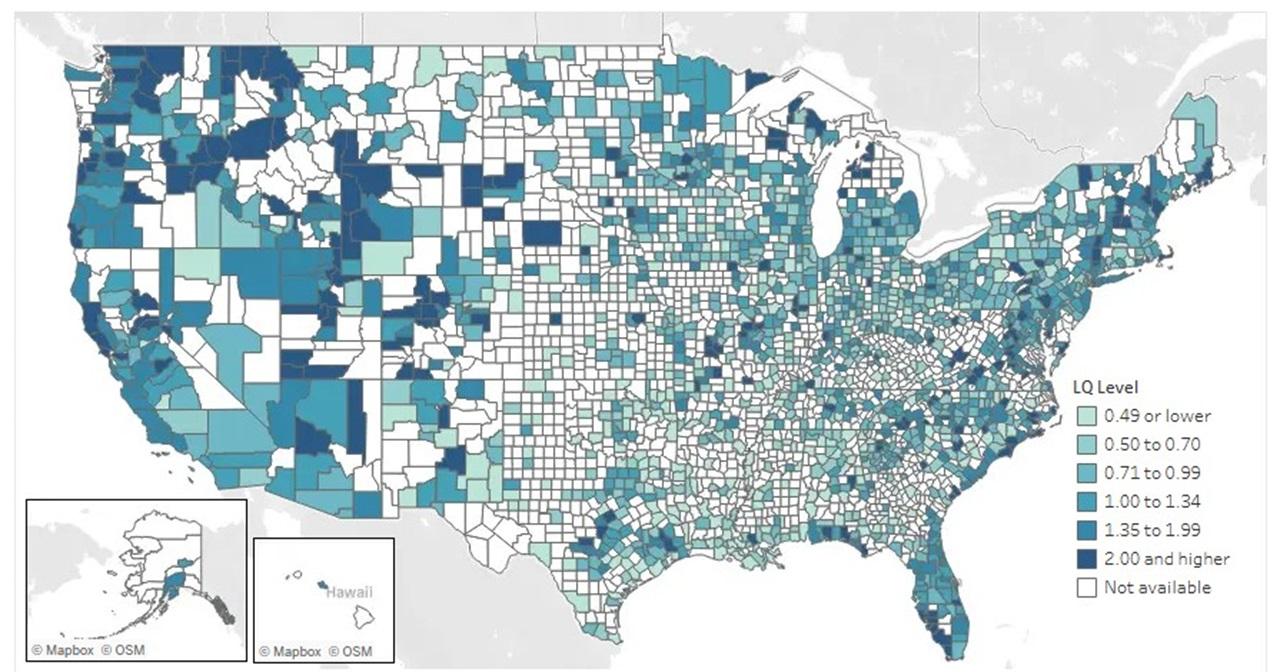
    At the county level, population growth slowed across much of the country. Among the nation’s 3,143 counties and the District of Columbia, the majority experienced decelerating population gains in 2025. Net Domestic Migration has become the most visible driver of county-level divergence. Population flows continue to shift away from the largest and most expensive counties toward smaller and less densely populated areas.

    Across metropolitan areas, the relationship between population growth and single-family building permits is both positive and statistically strong. With an R² of 0.6248, population change alone explains roughly 62% of the variation in permit activity, reinforcing the role of demographic growth as a primary driver of housing supply.

    Read More

  • Colorado’s housing market finds balance in first quarter

    Colorado’s housing market finds balance in first quarter

    According to the latest Market Trends Housing Report from the Colorado Association of REALTORS, housing markets across Denver, as well as statewide, showed signs of finding balance in the first quarter of 2026. This included modest gains in pending and closed sales, stable median home pricing and an uptick in inventory, creating a more homebuyer-friendly environment heading into the full spring season.

    In Colorado’s full statewide market performance, there were 12,803 new home listings in March with 9,541 pending sales, up 7.2% from a year prior, as well as 7,463 sold listings, up 2.7% from March 2025.

    Read More 

  • Spring demand improves affordability and boosts house price growth

    Spring demand improves affordability and boosts house price growth

    On April 16, 2026, First American Data & Analytics, a leading national provider of property-centric information, risk management and valuation solutions and a division of First American Financial Corporation, released its March 2026 Home Price Index (HPI) report. The HPI report found that improving affordability and emerging spring demand may boost house price growth nationally.

    House price growth reported in last month’s HPI for January 2026 to February 2026 was revised up by +0.17 percentage point, from -0.02 percent to +0.15 percent.

    The report tracks home price changes less than four weeks behind real time at the national, state and metropolitan levels, and includes metropolitan price tiers that segment sale transactions into starter, mid-level and luxury tiers.

    Read More

  • New economic report proposes housing shortage solution

    New economic report proposes housing shortage solution

    The annual Economic Report of the President was released on April 10, 2026 and estimated that the United States has a shortage of 10 million houses. The housing chapter of the annual economic report proposed that reducing various regulations on residential construction could help spur the construction of as many as 13.2 million homes.

    That could add, on average, 1.3 percentage points to annual economic growth over the next decade, as well as support 2 million manufacturing and construction jobs. The housing chapter of the annual report also lays out a blueprint for how more home construction would help the middle class and the overall economy.

    Read More