

News

  • Housing bonds win at the ballot box; two NAHB-backed land-use measures lose

    Housing bonds win at the ballot box; two NAHB-backed land-use measures lose

    Voters liked housing money more than housing rules this November. The National Association of Home Builders reported Nov. 11 that housing ballot measures fared well nationwide in the midterms. Two measures it backed went down, though: California’s Proposition 45 and Massachusetts’ Question 7.

    Prop 45 would have sped up environmental reviews and legal challenges for projects deemed “essential,” from hospitals to housing. It also would have let developers submit one project alternative for review instead of several. NAHB’s State and Local Issues Fund gave $20,000 to the campaign. Question 7 would have allowed single-family homes on lots as small as 5,000 square feet, subject to reasonable local rules. It lost narrowly, with support concentrated in larger urban areas and opposition in rural communities, NAHB said. The fund put $40,000 into the effort, first to gather signatures and then to push for passage.

    Funding measures fared better. NAHB lists California’s Prop 1, an $11.25 billion bond for veteran and housing programs, as a winner. So is Prop 37, which authorizes $25 billion in bonds for second-mortgage loans covering up to 17% of the price of a new home. Rhode Island’s $120 million housing bond and Hawaii’s amendment on housing infrastructure bonds also passed. Property tax results split. Measures in Florida, North Carolina and Tennessee passed, while Oklahoma’s and Wyoming’s failed. Colorado’s natural gas amendment also lost.

    For builders, the message is plain: Voters will fund housing and help buyers, but they’re still wary of rewriting review and lot-size rules.


    Read Full Article

  • Toll Brothers opens gated Rancho Murieta community from $1.08 million
    ,

    Toll Brothers opens gated Rancho Murieta community from $1.08 million

    Gated, lake-filled and priced from $1.08 million: Toll Brothers has opened a new luxury community in Sacramento County. Toll Brothers at Rancho Murieta, announced Nov. 13, offers one- and two-story single-family designs from 3,000 to more than 3,700 square feet, with four to five bedrooms, 3.5 to five baths and three-car garages. Select designs include first-floor primary suites, and buyers can personalize their homes through the Toll Brothers Design Studio.

    The community sits within a gated master plan along the Cosumnes River. Amenities include five lakes for fishing and paddleboarding, 17 miles of hiking and biking trails, sports fields, a dog park, playgrounds, an amphitheater, a community garden and a private sports complex. It is near Interstate 5, U.S. 50 and Highway 99, and within the Elk Grove Unified School District.

    The Toll Brothers Sales Center was set to open that weekend, with a grand opening event scheduled for Saturday, Nov. 14, at 14847 Campos Verde. Scott Esping, division president of Toll Brothers in Sacramento, said the community pairs home designs with an amenity-rich setting.

    Read Full Article

  • Villa names former Century Communities CFO as CEO

    Villa names former Century Communities CFO as CEO

    Offsite builder Villa has a new chief executive with a large-scale homebuilding background. The company named David Messenger, former chief financial officer of Century Communities, as CEO as it looks to expand into larger communities and deepen partnerships with developers and homebuilders.

    Messenger said he sees potential in bringing a large-scale homebuilder’s operating discipline to Villa, with an emphasis on predictable execution and profitable growth. He said Villa hopes to partner with homeowners, multifamily operators, land developers, homebuilders and capital partners. Founded in 2019, Villa says it has delivered more than 425 homes using offsite construction.

    Read Full Article

  • New Home Sales Reach Annual High in October Despite Affordability Challenges

    New Home Sales Reach Annual High in October Despite Affordability Challenges

    New home sales reached their highest level of the year in October, despite persistent affordability challenges, elevated mortgage rates and broader economic uncertainty. According to the latest data from the U.S. Census Bureau and the Department of Housing and Urban Development, sales of newly constructed single-family homes increased 14.2% to a seasonally adjusted annual rate of 701,000 units. Sales were also 7.5% higher than in October 2025, although year-to-date activity remained 3% below the previous year’s levels.

    The inventory of newly constructed single-family homes declined to 470,000 units in October, representing an eight-month supply at the current sales pace. Approximately 114,000 of those homes were completed and ready for occupancy. Meanwhile, the median new home sales price reached $391,300, reflecting a 3.2% year-over-year decline as builders continue to navigate a challenging affordability environment.

    While October’s estimated sales increase is an encouraging development for the residential construction industry, the figures remain subject to revision and do not establish a sustained market recovery. Builders continue to rely on pricing adjustments and sales incentives to attract prospective buyers, with financing costs and consumer purchasing power expected to remain important factors influencing housing demand heading into 2027.

    Read Full Article

  • Home is where the wealth is: Residences hit 26% of household assets

    Home is where the wealth is: Residences hit 26% of household assets

    Americans hold more of their wealth in their homes than in their retirement accounts. In 2025, primary residences were worth a combined $47.2 trillion, or 26% of total household assets, according to a National Association of Home Builders analysis of the Federal Reserve’s Survey of Consumer Finances. Other financial assets made up 20%, retirement accounts 18% and business interests 17%. Nearly two-thirds of households (66%) owned their primary residence, compared with 55% that held retirement accounts and 20% that owned stocks or bonds.

    Median net worth for homeowner households was $458,900, compared with $10,600 for renters, or about 43 times as much. From 2022 to 2025, homeowners’ median net worth rose 6%, while renters’ fell 7%. The analysis notes that income, age, education and other household characteristics also contribute to the gap, so the findings show an association with homeownership rather than a sole cause.

    Equity played a different role depending on the household. Just over one-third of homeowners owned their homes free of mortgage debt, and they held a median of $300,000 in primary residence equity, compared with $205,000 for owners with a mortgage. Among households age 75 and older, home equity made up 62% of wealth in the lowest-income group, compared with 16% in the highest.

    Read Full Article

  • New homes stay more affordable than existing homes as median price gap nears $40,000

    New homes stay more affordable than existing homes as median price gap nears $40,000

    New construction is holding its price advantage over the resale market — and the gap is wide. The national median new-home price was $393,300 in the third quarter of 2026, down 4.2% from $410,700 in the second quarter. The existing-home median was $432,900, down 0.5% from $434,900. That difference of nearly $40,000 kept new homes more affordable relative to existing ones, according to the latest National Association of Home Builders/Wells Fargo Cost of Housing Index.

    The index measures the share of income a family needs to make a mortgage payment on a median-priced home. A family earning the national median income of $106,800 needed 33% of its income for a new home, down from 34% in the second quarter. For an existing home, that share was 36%. Low-income families, defined as those earning 50% of the median income, needed 66% for a new home, down from 67%, and 73% for an existing one.

    Local conditions vary widely. The index also tracks 175 metro areas, where it measures the cost of a median-priced existing home. Eight markets are severely cost-burdened, with families spending more than 50% of their income, led by San Jose-Sunnyvale-Santa Clara, Calif. (79%), Urban Honolulu (73%) and San Diego-Chula Vista-Carlsbad, Calif. (70%). Another 87 are cost-burdened at 31% to 50%, and 80 are at 30% or lower. Decatur, Ill., ranks lowest at 17%, followed by Elmira, N.Y. (18%), and Peoria, Ill. (19%).

    Read Full Article

  • Toll Brothers previews Sagebrush at EverRange in north Florida

    Toll Brothers previews Sagebrush at EverRange in north Florida

    The dirt is moving, but the doors won’t open until 2027. Toll Brothers announced Nov. 11 that site work is underway at Sagebrush at EverRange, its next Jacksonville community, at 13021 Foresta Lane. The builder expects to open for sales in early 2027.

    Here’s what’s planned: one- and two-story luxury single-family homes in five new floor plans, with prices anticipated from the low $600,000s. Buyers will personalize their homes at the Toll Brothers Design Studio, working with company design consultants.

    The setting is a golf cart-friendly neighborhood with preserve views, in the EverRange master plan between eTown and Nocatee. The amenity list is long. It includes a resort-style pool, a splash pad, pickleball courts, a playground, a dog park, and walking and biking trails. Toll Brothers says beaches, major commuter routes, medical centers, shopping and dining are all within easy reach.

    Greg Netro, group president of Toll Brothers in North Florida, said the community will reflect the company’s quality and craftsmanship. Pricing, floor plans and timing are Toll Brothers’ projections, and the announcement doesn’t report sales or closings. Prospective buyers are encouraged to join an interest list.

    Read Full Article

  • Housing bonds win at the ballot box; two NAHB-backed land-use measures lose

    Housing bonds win at the ballot box; two NAHB-backed land-use measures lose

    Voters liked housing money more than housing rules this November. The National Association of Home Builders reported Nov. 11 that housing ballot measures fared well nationwide in the midterms. Two measures it backed went down, though: California’s Proposition 45 and Massachusetts’ Question 7.

    Prop 45 would have sped up environmental reviews and legal challenges for projects deemed “essential,” from hospitals to housing. It also would have let developers submit one project alternative for review instead of several. NAHB’s State and Local Issues Fund gave $20,000 to the campaign. Question 7 would have allowed single-family homes on lots as small as 5,000 square feet, subject to reasonable local rules. It lost narrowly, with support concentrated in larger urban areas and opposition in rural communities, NAHB said. The fund put $40,000 into the effort, first to gather signatures and then to push for passage.

    Funding measures fared better. NAHB lists California’s Prop 1, an $11.25 billion bond for veteran and housing programs, as a winner. So is Prop 37, which authorizes $25 billion in bonds for second-mortgage loans covering up to 17% of the price of a new home. Rhode Island’s $120 million housing bond and Hawaii’s amendment on housing infrastructure bonds also passed. Property tax results split. Measures in Florida, North Carolina and Tennessee passed, while Oklahoma’s and Wyoming’s failed. Colorado’s natural gas amendment also lost.

    For builders, the message is plain: Voters will fund housing and help buyers, but they’re still wary of rewriting review and lot-size rules.

    Read Full Article

  • Villa names former Century Communities CFO as CEO

    Villa names former Century Communities CFO as CEO

    Offsite builder Villa has a new chief executive with a large-scale homebuilding background. The company named David Messenger, former chief financial officer of Century Communities, as CEO as it looks to expand into larger communities and deepen partnerships with developers and homebuilders.

    Messenger said he sees potential in bringing a large-scale homebuilder’s operating discipline to Villa, with an emphasis on predictable execution and profitable growth. He said Villa hopes to partner with homeowners, multifamily operators, land developers, homebuilders and capital partners. Founded in 2019, Villa says it has delivered more than 425 homes using offsite construction.

    Read Full Article

  • New Homes Offer Nearly $40,000 Price Advantage Over Existing Homes

    New Homes Offer Nearly $40,000 Price Advantage Over Existing Homes

    Newly constructed homes are offering a growing affordability advantage over existing properties, according to the latest NAHB/Wells Fargo Cost of Housing Index. During the third quarter of 2026, the national median price of a new home reached $393,300, compared with $432,900 for an existing home. The 9.2% price difference represents the largest affordability advantage for new construction since the index began tracking the price disparity.

    The findings also reveal that households earning the national median income would need to allocate 33% of their earnings toward mortgage payments on a median-priced new home, compared with 36% for an existing property. The improvement comes as residential builders continue to respond to market conditions through competitive pricing, financing incentives and adjustments to their product offerings.

    For the residential construction industry, the widening price gap presents an opportunity to strengthen the competitive position of newly built homes. While affordability remains a nationwide concern, builders that successfully balance construction efficiency, design and attainable pricing could be well positioned to capture additional buyer interest heading into 2027.

    Read Full Article

  • Mortgage Rates Edge Lower Ahead of Thanksgiving Holiday

    Mortgage Rates Edge Lower Ahead of Thanksgiving Holiday

    Mortgage rates declined ahead of the Thanksgiving holiday, providing modest relief for prospective homebuyers as the residential housing market continues to face affordability challenges. According to Freddie Mac’s latest Primary Mortgage Market Survey, released November 25, the average 30-year fixed-rate mortgage decreased to 7.21%, compared with 7.28% the previous week. The average 15-year fixed-rate mortgage also moved lower, declining from 6.66% to 6.54%.

    Despite the weekly improvement, mortgage rates remain considerably higher than levels recorded during the same period last year, when the average 30-year fixed-rate mortgage stood at 6.23%. Elevated borrowing costs continue to place pressure on household purchasing power, making it more difficult for prospective buyers to qualify for financing and accommodate monthly mortgage payments. For residential builders, these conditions can influence everything from consumer traffic and sales absorption to pricing strategies and construction schedules.

    As the housing industry approaches the end of 2026, mortgage rate fluctuations remain an important consideration for builders evaluating market conditions and planning future developments. Financing incentives, mortgage rate buydowns and competitively priced floor plans may continue to play a prominent role in helping builders attract buyers. A more sustained decline in borrowing costs would provide greater opportunities to improve housing affordability and support residential sales activity heading into the new year.

    Read Full Article

  • Toll Brothers opens gated Rancho Murieta community from $1.08 million

    Toll Brothers opens gated Rancho Murieta community from $1.08 million

    Gated, lake-filled and priced from $1.08 million: Toll Brothers has opened a new luxury community in Sacramento County. Toll Brothers at Rancho Murieta, announced Nov. 13, offers one- and two-story single-family designs from 3,000 to more than 3,700 square feet, with four to five bedrooms, 3.5 to five baths and three-car garages. Select designs include first-floor primary suites, and buyers can personalize their homes through the Toll Brothers Design Studio.

    The community sits within a gated master plan along the Cosumnes River. Amenities include five lakes for fishing and paddleboarding, 17 miles of hiking and biking trails, sports fields, a dog park, playgrounds, an amphitheater, a community garden and a private sports complex. It is near Interstate 5, U.S. 50 and Highway 99, and within the Elk Grove Unified School District.

    The Toll Brothers Sales Center was set to open that weekend, with a grand opening event scheduled for Saturday, Nov. 14, at 14847 Campos Verde. Scott Esping, division president of Toll Brothers in Sacramento, said the community pairs home designs with an amenity-rich setting.

    Read Full Article


  • USGBC heads to COP31 with focus on efficiency, electrification and zero waste

    USGBC heads to COP31 with focus on efficiency, electrification and zero waste

    The U.S. Green Building Council and Green Business Certification Inc. will attend COP31 in Antalya, Turkey, from Nov. 9 through 18, aiming to partner with governments and businesses to scale climate solutions through efficiency, electrification and zero waste. USGBC says it will engage the global green building community to scale climate action and contribute to benefits including affordability, grid security and climate resilience. The delegation includes Peter Templeton, president and CEO of USGBC, and four other staff members.

    USGBC says the COP31 presidency’s Action Agenda adds a new focus on cities’ role in cutting emissions and building resilience, and gives greater weight to building efficiency and electrification. It also calls for multi-level governance, in which national and subnational governments work together on climate action, and for sustainable finance for cities. For buildings, the priorities include whole-life carbon emissions, green building certification, and resilient infrastructure and building standards.

    USGBC has endorsed three initiatives: the 2026 COP31 International Business Energy Efficiency Letter; the 35×35 Global Electrification Pledge, which aims to raise electricity’s share of total final energy consumption to 35% globally by 2035; and the Antalya Compact for Energy Efficient Buildings, which aims to reduce building operational energy intensity through stronger energy-performance standards, retrofits and electrification. On zero waste, USGBC has offered support to the new Istanbul Platform on Zero Waste for Climate Action and plans to introduce its newly launched TRUE v2 to global stakeholders.

    USGBC says government financial and technical assistance, codes and mandates, leadership by example, and efficiency and green building incentives make a difference, and it plans to share knowledge and resources at COP31 to support those efforts. It will take part in events at the Buildings Pavilion as a member of the Global Alliance for Buildings and Construction, at the America Is All In and USA Climate pavilions, and in an event with the SEEC Institute.

    Read Full Article 

  • New NAHB research reveals which stages of home construction take the longest

    New NAHB research reveals which stages of home construction take the longest

    Building the average single-family detached home takes 25.3 weeks, or about 5.8 months, according to the National Association of Home Builders. The figure comes from the October 2026 NAHB/Wells Fargo Housing Market Index survey, which asked builders how long each of seven major construction stages takes. It covers the steps a builder typically takes after buying a finished lot for a single-family detached home built for sale.

    Interior finishes take the longest, at an average of 6.4 weeks. That stage includes drywall, interior doors, painting, cabinets, countertops, plumbing fixtures and flooring. Framing and major systems rough-ins, meaning HVAC and plumbing and electrical work other than fixtures, each take 3.7 weeks. Final steps such as landscaping, outdoor structures and clean-up require 3.6 weeks, while exterior finishes, including siding, roofing, windows and doors, take 3.4 weeks. Site work and foundations are the shortest stages, at a little over two weeks.

    NAHB’s total is close to the Census Bureau’s average of 6.1 months. Census estimates show custom homes take significantly longer, NAHB notes, and times vary with geography and the characteristics of the home and builder. NAHB says the Census estimate rests on a considerably larger and more stratified sample and is the better source for total construction time. NAHB’s advantage is the stage-by-stage breakdown, which it says may help builders educate customers, decide when to buy materials, schedule inspections or manage subcontractors.

    Read Full Article 

  • AIA updates how architecture billings track construction spending

    AIA updates how architecture billings track construction spending

    The American Institute of Architects has published a white paper, “Clarifying the Construction Outlook by Integrating Architecture Billings with Broader Economic Indicators,” examining the performance of the AIA/Deltek Architecture Billings Index. Amid economic uncertainty, the paper looks at how architecture firms and the broader architecture, engineering and construction industry use the index and related indicators to assess current market conditions and forecast building activity.

    The analysis updates the relationship between the index and construction spending. AIA finds a slightly weaker correlation but a longer lead time, which it attributes to extended project schedules driven by supply chain challenges, cost inflation, interest rate volatility and economic uncertainty.

    AIA launched the Architecture Billings Index in 2005 as a leading indicator of construction activity. Because design work comes before construction, the broader building industry relies on the data for planning, and architecture firms are often the earliest comprehensive source of information on proposed projects. A 2014 update, “Designing the Construction Future,” added design contracts as a leading indicator of future billings and adjusted the relationship between design activity and construction spending to reflect the Global Financial Crisis.

    Several events have affected the timing and strength of that relationship since, AIA says. They include the slow recovery of the nonresidential building sector after the Global Financial Crisis, pandemic disruptions, and recent economic and political uncertainty that has complicated development and construction planning. The paper also notes the industry’s reliance on a range of indicators, including construction spending and starts, building material costs, real estate trends and AIA’s Consensus Construction Forecast.

    Read Full Article 

  • New appraisal reporting system aims to capture energy-efficient home features
    ,

    New appraisal reporting system aims to capture energy-efficient home features

    Fannie Mae and Freddie Mac introduced a new appraisal reporting standard on Nov. 2 that the National Association of Home Builders says advances its long-running effort to make appraisals reflect new construction more fully. NAHB calls the Uniform Appraisal Dataset 3.6 one of the biggest changes to residential appraisal reporting in more than a decade, with implications for builders, lenders and home builders associations nationwide.

    An appraisal estimates a home’s market value and plays a key role in securing a mortgage. The old system relied on fixed forms, which often left extra details in written comments. The new report adapts to each property and presents information more consistently, NAHB says, giving appraisers and lenders a clearer picture of the home. It does not guarantee a higher value.

    NAHB points to three possible benefits for builders and buyers. The system captures details that were previously missed or reported inconsistently, including energy-efficient and green features. Standardized information should make it easier to compare new homes with similar properties. And clearer information could mean fewer requests for revisions or explanations, reducing corrections and delays.

    NAHB says it has worked for years with Fannie Mae, Freddie Mac and other stakeholders on new-home appraisal reporting. Its longstanding calls include expanding appraisal data standards to cover new construction, energy efficiency and green building; improving the quality and availability of new-construction data; and strengthening appraiser education and experience requirements so appraisals properly account for lot values, building costs and newer construction methods. NAHB says it will keep working with the two companies, appraiser organizations and federal agencies.

    Read Full Article

  • One-third of new U.S. single-family homes receive HERS ratings
    ,

    One-third of new U.S. single-family homes receive HERS ratings

    About one-third of new single-family homes built in the U.S. in 2025 were rated for energy efficiency, according to the Residential Energy Services Network’s 2026 Trends in HERS Rated Homes Report. RESNET says 34% of those homes received a score on its HERS Index, which works like a miles-per-gallon rating for houses: the lower the number, the less energy a home uses. A score of 100 represents a home built to 2006 standard practices, and a score of zero means a home produces as much energy as it consumes over a year.

    HERS Raters scored more than 420,000 homes in 2025, and the average HERS Index was 53, a two-point improvement from 2024. RESNET says that average is 47% more efficient than a 2006 home, and it has dropped 11 points since 2013. Sixty-eight percent of the homes rated were one- and two-family dwellings, and 32% were multifamily units.

    The report covers national, state and local trends. It tracks rating activity, average scores, home characteristics, building components, equipment efficiencies, air leakage and solar use. State-level data shows total ratings and the share of new homes rated in each state, and the city-level analysis lists the top 25 markets for single-family and multifamily ratings.

    RESNET’s HERSH2O whole-house water efficiency program also had a record year, with more than 7,500 homes rated in 2025, a 25% increase over 2024. The national average HERSH2O score was 62, and a score of 70 or lower is required to qualify for the WaterSense Labeled Homes program.

    Read Full Article

  • Kitchen design shifts toward defined spaces and greater functionality
    ,

    Kitchen design shifts toward defined spaces and greater functionality

    Fully open floor plans are losing ground to kitchens with defined zones, according to the National Kitchen & Bath Association’s 2027 Kitchen Trends Report. The survey of 830 designers, manufacturers, remodelers, architects and other industry professionals in the U.S. and Canada identifies ten top kitchen design trends, including emerging, enduring and fading styles. It also covers product categories from islands and cabinetry to countertops and appliances.

    Expanded pantries, cabinetry and back kitchens are helping create more organized spaces, NKBA says. Flexible transitions between open and enclosed areas let kitchens adapt as household needs change.
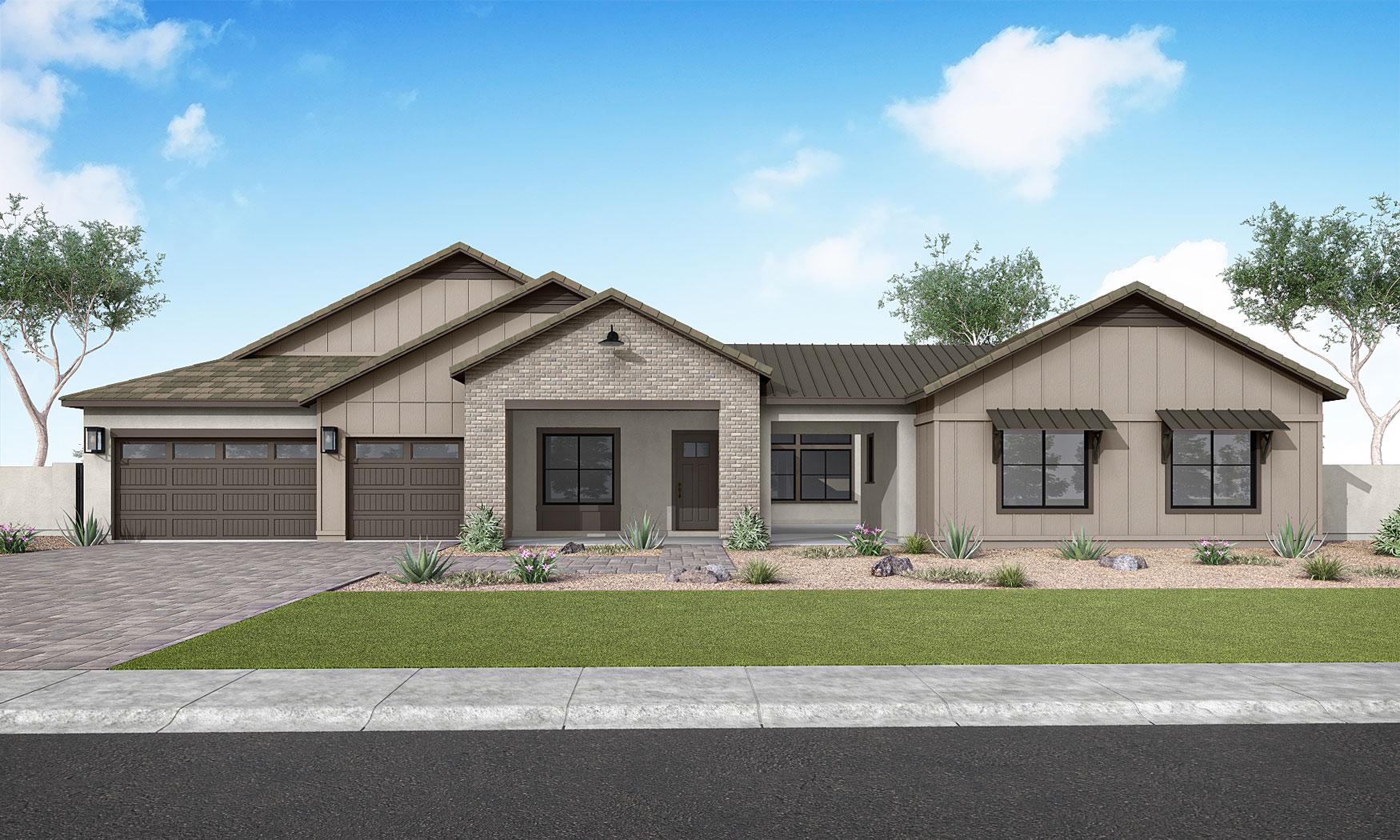

    Attached mudrooms top the list of functional features professionals expect to be most popular over the next three years, at 94%. Flexible spaces for home offices and kids’ study areas follow at 49%, and secure areas to leave deliveries at 37%. Among lifestyle features, 90% cited dedicated beverage areas, and pet feeding stations (64%) and eat-in kitchens (63%) were also among the most cited.

    As more homeowners choose to renovate rather than move, NKBA says, lasting quality is taking priority over short-lived trends. Bill Darcy, NKBA’s global president and CEO, said homeowners are reimagining what their kitchens can do to make everyday life easier, healthier and more enjoyable.

    Read Full Article


  • Lennar eyes new mall-to-mixed-use redevelopment in Florida

    Lennar eyes new mall-to-mixed-use redevelopment in Florida

    Lennar, one of the nation’s largest homebuilders, is planning to purchase the Boynton Beach Mall. The mall is currently scheduled to close in early 2027 and sits on 91 acres in Boynton Beach, Fla.

    The builder intends to transform the space with townhomes and mixed-use opportunities.

    “Although planning is in the early stages and we look forward to stakeholder feedback, our vision is to take advantage of this unique opportunity with a mix of single-family attached housing opportunities, complemented by retail, commercial, open space and civic uses that will create a walkable, connected environment,” said Danielle Tocco, Vice President of Communications at Lennar, in a statement.

    The market in South Florida is green for new developments, with Boynton Beach a particularly strong market according to Realtor.com. Homes in the area sell in a median of 76 days and at a median price of $348,000.

  • San Francisco mansion sells for $28.5 million, breaking records

    San Francisco mansion sells for $28.5 million, breaking records

    A mansion in San Francisco sold for $28.5 million, $10 million above the home’s $18.5 million asking price, on Oct. 22, 2026. With eight bedrooms and seven bathrooms, the luxury residence was on the market for 20 days.

    The Cherry Street home is not the first big purchase we’ve seen from San Francisco’s luxury housing market: A home at 2 Sixth Ave. sold for $15 million, with a listing price of $8 million. In May, a home in Cow Hollow at 2512 Union St. sold for $15 million after listing for $7.95 million.

    We’ve followed the city’s luxury boom all year, which was largely attributed to the AI sector in San Francisco.

    Read Full Article

  • New home sales hold steady in September

    New home sales hold steady in September

    According to the New Residential Construction Report from the U.S. Department of Housing and Urban Development and the U.S. Census Bureau, sales of new single-family houses hold strong at a seasonally adjusted annual rate of 676,000 in September 2026.

    This is a minor 0.6%  decline from a bright August report and a 5.3% year-over-year dip. The median sales price recorded at $400,400, up 3.9% month-to-month, yet is down 3.9% compared to the year before.

    Total for-sale inventory slowed to 476,000 units, bringing supply down to an 8.4-month pace.

    “Affordability remains a significant hurdle for prospective home buyers,” said Bill Owens, chairman of the National Association of Home Builders (NAHB). “Builders continue to offer incentives and adjust pricing to attract buyers, but elevated mortgage rates and high home prices are limiting the number of households that can afford to purchase a home.”

    Overall, resilient buyers, particularly in price tiers under $400,000, made up over half of all sales. This signals continuing opportunities for homebuilders operating targeted incentives, which, according to NAHB, 65% of homebuilders offer.

    Read Full Article 


  • New home sales outperform expectations

    New home sales outperform expectations

    According to a report from Realtor.com, new home sales performed better than expected in September, as homebuilders increasingly used incentives to entice hesitant homebuyers.

    According to the U.S. Census Bureau and the Department of Housing and Urban Development, contract signings for new-construction properties reached a seasonally adjusted annual rate of 676,000 in September. This is 0.6% below August’s figure and down 5.3% from a year earlier, but more than the 653,000 forecast.

    New home sales in the Northeast rebounded 28% higher than last month and 10.3% higher than 2025. However, all other regions in the U.S. posted declines.

    Throughout 2026, builders have contrasted an unsteady housing market with buyer incentives, a strategy that has proven successful as sales outperform expected rates.

    Read Full Article

  • NKBA announces Thirty Under 30 Class of 2027

    NKBA announces Thirty Under 30 Class of 2027

    The National Kitchen and Bath Association (NKBA) announced its Thirty Under 30 Class of 2027. This recognition celebrates exceptional young leaders whose passion, vision and creativity are shaping the future of the kitchen and bath industry.

    The Thirty Under 30 Class of 2027 will be officially honored at KBIS from February 2 to 4 in Las Vegas.

    “Being selected as a member of the NKBA Thirty Under 30 Class was a true honor,” said Cayleigh McCusker, Class of 2026. “To be recognized by your peers and colleagues in the industry as deserving for such an achievement is really a testament to the hard work paying off. Becoming part of this young, talented and driven group of individuals was a goal I set for myself, and I couldn’t be happier that it came true.”

    Read Full Article 

  • Tri Pointe Homes acquires 40 acres in Arizona for $20 million

    Tri Pointe Homes acquires 40 acres in Arizona for $20 million

    Tri Pointe Homes acquired roughly 40 acres in East Mesa, Ariz., for $20 million. This deal expands the builder’s offerings in the area with plans for a new gated community, Ascension.

    Ascension is expected to include 46 single-family homes across four distinct designs, ranging from 4,304 to 5,137 square feet.

    Land development is slated for Q4 2026, with sales expected to launch in Q1 2028.

    “Tri Pointe Homes is selective about where we invest and what we can uniquely bring to a market and Ascension adds something very intentional to our East Valley presence,” said James Attwood, Division President of Tri Pointe Homes Arizona. “This location gives us an opportunity to pair the advantages of an established city with a limited collection of premium homes designed to give homebuyers greater space, flexibility and a more intimate community experience. Mesa’s recognition as one of America’s best-run cities 1 further reinforces why we see long-term value here.”

    Read Full Article

  • Mortgage rates ease to 7.32%

    Mortgage rates ease to 7.32%

    According to Freddie Mac’s recent Primary Mortgage Market Survey released on Oct. 22, 2026, the 30-year fixed-rate mortgage (FRM) averaged 7.32%.

    “The average 30-year fixed-rate mortgage declined this week, offering some relief to prospective homebuyers,” said Sam Khater, Freddie Mac’s Chief Economist.

    The current FRM is down from last week’s average of 7.40%. A year ago at this time, the 30-year FRM averaged 6.19%.

    The 15-year FRM averaged 6.68%, down from the previous week when it averaged 6.71%. A year ago at this time, the 15-year FRM averaged 5.44%.

    Read Full Article

  • Premium buyers drive PulteGroup’s Q3 earnings

    Premium buyers drive PulteGroup’s Q3 earnings

    According to PulteGroup’s Q3 2026 Financial Report, the homebuilder maintained resilient gross margins despite pressures from elevated mortgage rates, inflation and stretched homebuyer affordability.

    The builder is concentrating on the higher-margin move-up and active-adult buyer segments, helping cushion margins against entry-level affordability headwinds. PulteGroup President and CEO, Ryan Marshall, reflected that the company’s balance of price and pace of home sales is critical in the current environment.

    PulteGroup reported 6,876 home closings, down 9% year-over-year, with an average selling price of $561,000, declining 1% year-over-year.

    The company’s community count increased 7% year-over-year, totaling 1,077 active communities.

    “With homebuying demand increasingly pressured by rising mortgage rates, widespread inflation and global unrest, we continue to benefit from our diversified operating platform and consistent strategies for delivering superior returns over the housing cycle,” said Marshall. “With more than 60% of our business now comprised of more profitable move-up and active-adult homebuyers, our strong gross margins were instrumental to driving third quarter earnings of $2.53 per share.”

    Read Full Article 

  • Why are U.S. homes getting smaller?

    Why are U.S. homes getting smaller?

    The average-sized household continues to shrink despite an increase in adults sharing a home, more so than in previous decades. This new trend is causing an increased demand for smaller homes, as U.S. homebuyers prioritize practicality.

    There are multiple reasons for this paradox: The number of adult children living with their parents is rising; divorce rates have decreased, so more married couples are living together. Additionally, the number of children per household is lessening and the number of seniors is increasing, with many of them living alone.

    According to John Burns Researching and Consulting, since 2010, the average household has shrunk from 2.54 to 2.42 people. As the average-sized household continues to shrink, the need for smaller homes in the U.S. market is rising.

    Read Full Article